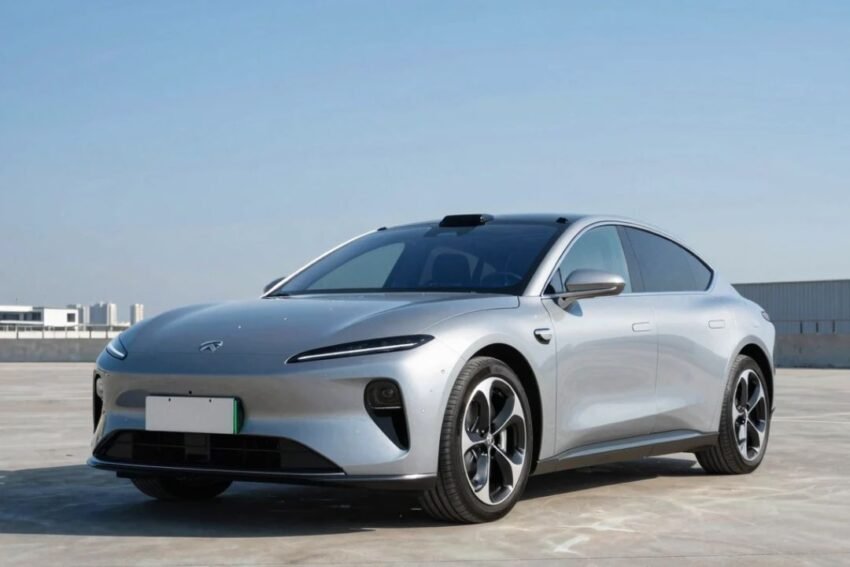
Introduction
Electric vehicles and smart cars are becoming an increasingly important part of modern transportation. Advances in battery technology, charging infrastructure, artificial intelligence, connectivity, driver-assistance systems, and vehicle software are changing how people think about cars.
In 2026, electric vehicles are no longer simply alternatives to gasoline-powered cars. Modern EVs can combine electric powertrains with sophisticated software, connected services, advanced safety systems, and increasingly intelligent driving features.
At the same time, smart-car technology is expanding beyond electric vehicles. Connected cars can communicate with smartphones, cloud services, navigation systems, charging networks, and other digital platforms.
This article explores the latest electric vehicle and smart car trends in 2026, including battery technology, charging, AI, autonomous driving, connected vehicles, safety, sustainability, and the future of transportation.
What Are Electric Vehicles?
Electric vehicles, commonly called EVs, use electric motors for propulsion instead of relying entirely on internal-combustion engines.
A battery-electric vehicle generally includes:
- Battery pack
- Electric motor
- Power electronics
- Charging system
- Thermal management system
- Vehicle-control software
When the vehicle needs energy, electricity stored in the battery is converted into power for the electric motor.
EVs have several characteristics that distinguish them from conventional gasoline-powered vehicles, including quiet operation, instant motor response, regenerative braking, and software-controlled power management.
What Are Smart Cars?
A smart car uses digital technologies to improve connectivity, safety, convenience, efficiency, or driving assistance.
Smart-car technologies can include:
- Connected navigation
- Smartphone integration
- Advanced driver assistance
- Voice controls
- Digital dashboards
- Over-the-air software updates
- Cloud-connected services
- Parking assistance
- Vehicle monitoring
- AI-powered features
An electric vehicle can also be a smart car, but smart-car technology is not limited to EVs.
Why EVs and Smart Cars Are Growing in 2026
Several technology trends are contributing to the development of modern vehicles.
Better Batteries
Battery technology continues to be a major area of research and development.
Improved batteries can potentially provide:
- Greater driving range
- Faster charging
- Longer service life
- Better energy efficiency
- Improved thermal performance
Battery chemistry and vehicle design vary significantly between manufacturers, so consumers should compare real-world specifications rather than relying on general technology claims.
1. Longer-Range Electric Vehicles
Driving range remains one of the most important considerations for EV buyers.
Modern electric vehicles are increasingly designed to provide practical range for:
- Daily commuting
- Family travel
- City driving
- Highway trips
- Long-distance journeys
Actual range depends on factors such as:
- Driving speed
- Weather
- Temperature
- Terrain
- Vehicle size
- Tire pressure
- Climate-control use
- Driving style
Therefore, advertised range should be treated as a standardized comparison rather than a guarantee of real-world performance.
2. Faster EV Charging
Charging technology is improving alongside batteries.
EV charging generally falls into several categories.
Home Charging
Home charging is convenient for drivers who can install appropriate equipment.
An EV can charge while parked overnight or during other periods when the vehicle isn’t being used.
Public Charging
Public chargers can be useful for longer trips or drivers without home charging.
DC Fast Charging
DC fast chargers can replenish battery energy significantly faster than typical home charging.
Charging speed depends on:
- Charger power
- Vehicle charging capability
- Battery temperature
- Battery state of charge
- Charging-network conditions
3. Expansion of Charging Infrastructure
Charging infrastructure is becoming an important part of EV adoption.
Charging networks are expanding in many markets, including:
- Highways
- Shopping centers
- Parking facilities
- Workplaces
- Residential areas
- Service stations
Better charger availability can reduce concerns about long-distance travel.
However, charging availability still varies significantly by location, so EV buyers should consider the charging network in their region.
4. AI-Powered Smart Cars
Artificial intelligence is becoming increasingly important in modern vehicles.
AI can support:
- Voice assistants
- Driver monitoring
- Navigation
- Predictive maintenance
- Personalization
- Driver assistance
- Traffic analysis
- Cabin features
For example, an AI-powered vehicle system can learn driver preferences and make personalized suggestions.
AI can also process information from cameras, sensors, navigation systems, and other vehicle components.
5. Advanced Driver Assistance Systems
Advanced driver assistance systems, commonly called ADAS, are becoming more common.
Depending on the vehicle, features may include:
- Adaptive cruise control
- Lane-keeping assistance
- Automatic emergency braking
- Blind-spot monitoring
- Traffic-sign recognition
- Parking assistance
- Driver monitoring
These systems are designed to assist drivers, not eliminate the need for attention and responsibility.
Drivers should always understand the capabilities and limitations of the specific system in their vehicle.
6. Autonomous Driving Technology
Autonomous driving remains one of the most closely watched areas of automotive technology.
Vehicles can use combinations of:
- Cameras
- Radar
- LiDAR
- Ultrasonic sensors
- GPS
- Mapping
- AI software
These technologies can help vehicles understand their surroundings.
However, automated driving capabilities differ significantly between systems. Drivers should never assume that an advanced driver-assistance feature makes a vehicle fully autonomous unless the technology is explicitly approved and designed for that use.
7. Over-the-Air Software Updates
Modern smart cars increasingly behave like connected computers.
Over-the-air updates can allow manufacturers to improve vehicle software without requiring every update to be installed manually at a service center.
Depending on the vehicle, updates can affect:
- Infotainment
- Navigation
- Driver assistance
- Battery management
- Vehicle controls
- Security
This creates an important connection between the vehicle and its software ecosystem.
8. Connected Car Technology
Connected vehicles can communicate with digital services through cellular or other wireless connections.
Connected features may include:
- Remote vehicle monitoring
- Smartphone apps
- Remote locking
- Charging management
- Vehicle location
- Maintenance notifications
- Navigation services
For EV owners, connectivity can be especially useful for checking charging status and scheduling charging.
9. Smart Navigation
Navigation systems are becoming more intelligent.
Modern EV navigation can consider:
- Traffic
- Charging stations
- Battery level
- Estimated energy consumption
- Route conditions
Some systems can recommend charging stops during long-distance trips.
This can make EV route planning easier than relying on a basic navigation system alone.
10. Vehicle-to-Home and Vehicle-to-Grid Technology
Some electric vehicles and charging systems support technologies that allow stored vehicle energy to be used beyond transportation.
Vehicle-to-Home
A compatible EV may provide electricity to a home during certain situations when the necessary equipment and grid conditions are available.
Vehicle-to-Grid
Vehicle-to-grid systems can allow compatible vehicles to interact with electricity networks.
These technologies could become more important as EV adoption increases and energy systems become more flexible.
Availability depends heavily on vehicle compatibility, local regulations, utility programs, and charging equipment.
11. Regenerative Braking
Regenerative braking is a key feature of many electric vehicles.
When an EV slows down, its electric motor can operate in a way that converts some of the vehicle’s kinetic energy into electrical energy and sends it back to the battery.
This can improve energy efficiency and reduce the amount of energy lost during braking.
Many EVs also offer different levels of regenerative braking that change the driving feel.
12. Smart Energy Management
EV software can monitor energy consumption and optimize vehicle performance.
Energy-management systems may consider:
- Battery temperature
- Driving conditions
- Climate control
- Charging status
- Power demand
- Route information
Efficient energy management can help drivers make better use of available battery capacity.
13. Improved EV Safety
Safety remains a major focus of electric and smart-car development.
Modern vehicles can use sensors and software to assist with:
- Collision detection
- Emergency braking
- Lane monitoring
- Driver attention
- Parking
- Blind-spot awareness
Electric vehicles also require specialized battery safety systems designed to monitor temperature, voltage, and other battery conditions.
14. Smarter Digital Cockpits
Modern vehicles increasingly feature digital dashboards and large infotainment displays.
A smart cockpit may integrate:
- Navigation
- Music
- Phone calls
- Vehicle settings
- Climate controls
- Charging information
- Voice assistants
Some manufacturers are also introducing more personalized interfaces that adapt to individual drivers.
15. Smartphone Integration
Smartphones are becoming an important part of the connected-car experience.
Depending on the vehicle, drivers may be able to:
- Unlock the vehicle
- Check battery status
- Locate the vehicle
- Start climate control
- Plan routes
- Monitor charging
- Receive maintenance notifications
This makes the smartphone an extension of the vehicle’s digital system.
16. Predictive Maintenance
Connected vehicles can collect information about vehicle components and operating conditions.
AI and data analysis may help identify potential maintenance issues before they become serious.
Possible applications include monitoring:
- Battery performance
- Tire pressure
- Brake systems
- Motor performance
- Charging systems
Predictive maintenance can potentially reduce unexpected downtime.
17. Sustainable Transportation
EVs are an important part of efforts to reduce transportation-related emissions.
Electric vehicles do not produce tailpipe emissions while driving.
However, their overall environmental impact depends on factors such as:
- Electricity generation
- Battery manufacturing
- Vehicle production
- Supply chains
- Recycling
- Vehicle lifespan
As electricity grids incorporate more low-carbon energy and battery recycling improves, the environmental benefits of EVs can potentially increase.
18. Battery Recycling
As more electric vehicles reach the end of their useful lives, battery recycling is becoming increasingly important.
Recycling can help recover valuable materials and reduce the need for some new raw-material extraction.
Battery recycling technologies continue to develop, and recycling systems are likely to become increasingly important as global EV adoption grows.
19. Electric Performance Cars
EV technology isn’t limited to efficiency-focused vehicles.
Electric motors can provide rapid torque delivery, allowing electric performance vehicles to deliver strong acceleration.
Performance EVs can combine:
- High-power electric motors
- Advanced battery systems
- Sophisticated traction control
- Regenerative braking
- Software-controlled performance modes
This is changing expectations about what an electric car can do.
20. The Rise of Software-Defined Vehicles
One of the most important trends in modern automotive technology is the shift toward software-defined vehicles.
In a software-defined vehicle, software can play a major role in controlling and improving vehicle functions.
This can include:
- Driver assistance
- Infotainment
- Energy management
- Connectivity
- Vehicle personalization
- Over-the-air updates
As software becomes more important, automotive companies are increasingly operating partly like technology companies.
Benefits of Electric and Smart Cars
Lower Operating Costs
EVs can have lower energy and maintenance costs in some situations compared with conventional vehicles.
Actual savings depend on electricity prices, fuel prices, vehicle efficiency, maintenance requirements, and driving patterns.
Quiet Driving
Electric motors generally produce less mechanical noise than combustion engines.
Instant Motor Response
Electric motors can provide rapid torque response.
Smart Connectivity
Connected features can improve convenience.
Advanced Safety Assistance
Modern vehicles can provide multiple driver-assistance technologies.
Software Improvements
Over-the-air updates can improve or modify vehicle software without requiring some traditional service visits.
Challenges of EVs and Smart Cars
Charging Time
Even with fast charging, EV charging generally requires more planning than refueling a conventional vehicle.
Charging Availability
Infrastructure varies between locations.
Purchase Price
Some advanced EVs and smart cars can have high upfront prices.
Battery Degradation
Battery capacity can change over time depending on usage, temperature, charging behavior, and other factors.
Software Complexity
Modern vehicles depend heavily on software, which creates new cybersecurity and reliability considerations.
Weather Effects
Cold or hot conditions can affect battery performance and energy consumption.
How to Choose an Electric Smart Car
Before purchasing an EV, consider:
Driving Range
Choose a vehicle with enough practical range for your daily needs.
Charging Options
Check whether you can charge at home and what public charging networks are available in your area.
Charging Speed
Compare the vehicle’s maximum charging capability.
Battery Warranty
Review the manufacturer’s battery warranty and coverage terms.
Safety Features
Check independent safety evaluations and available driver-assistance systems.
Software Features
Consider whether the vehicle offers useful connected services and updates.
Total Cost of Ownership
Look beyond the purchase price and consider electricity, maintenance, insurance, financing, and depreciation.
Future of Electric Vehicles and Smart Cars
The automotive industry is moving toward increasingly connected, electric, and software-driven transportation.
Future vehicles may offer:
- More efficient batteries
- Faster charging
- Better energy management
- More advanced AI
- Improved driver assistance
- Greater connectivity
- More sophisticated vehicle-to-grid integration
- Personalized software
- Better recycling systems
The exact pace of development will vary by market, manufacturer, regulation, infrastructure, and consumer demand.
Frequently Asked Questions
Are electric vehicles worth buying in 2026?
An EV can be a strong choice for drivers whose driving patterns, charging access, budget, and local infrastructure suit electric transportation.
What makes a car a smart car?
A smart car uses connected technologies, software, sensors, driver-assistance systems, digital interfaces, or other intelligent features to improve the driving experience.
Are all electric cars smart cars?
Not necessarily. Most modern EVs include some connected or digital features, but the level of smart-car technology varies between models.
How long do EV batteries last?
Battery life varies by vehicle, battery chemistry, climate, usage, charging behavior, and manufacturer design. Buyers should review the specific vehicle’s battery warranty and technical information.
Can EVs charge at home?
Many EV owners use home charging when suitable electrical infrastructure is available. Charging equipment and installation requirements depend on the vehicle and property.
Conclusion
Electric vehicles and smart cars are transforming transportation in 2026. Improvements in batteries, charging infrastructure, AI, connectivity, driver assistance, software updates, and energy management are creating vehicles that are increasingly efficient, connected, and intelligent.
The most important trend may be the convergence of electric power and software. Modern vehicles are becoming more than transportation devices—they are connected technology platforms capable of receiving software updates, analyzing information, communicating with digital services, and supporting drivers with advanced systems.
As battery technology improves and charging infrastructure expands, electric vehicles are likely to become increasingly practical for more drivers. At the same time, smart-car technologies will continue to shape safety, convenience, personalization, and the future of mobility.
For consumers, the best choice depends on individual needs, including range, charging access, price, safety, software features, and total ownership costs. For the automotive industry, the next generation of vehicles will increasingly depend on the successful combination of electric power, intelligent software, connectivity, and sustainable technology.