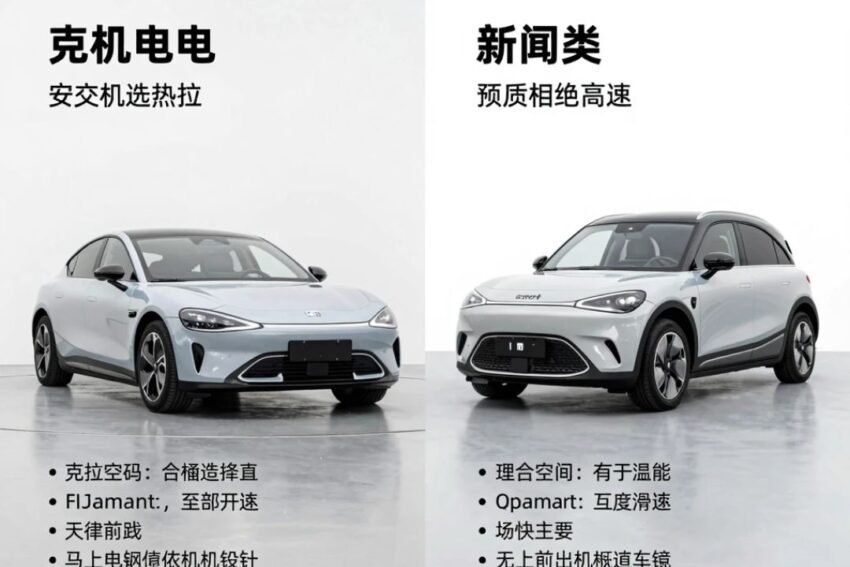
Introduction
The automotive industry is changing rapidly as electric vehicles and smart-car technologies become increasingly popular. Modern vehicles are no longer defined only by their engines, fuel efficiency, or mechanical performance. Battery technology, artificial intelligence, connectivity, software, sensors, and advanced safety systems are now major parts of the driving experience.
However, electric vehicles and smart cars are not the same thing.
An electric vehicle, or EV, is primarily defined by its electric powertrain. A smart car is defined by its use of connected technology, intelligent software, sensors, driver-assistance systems, and digital features. An EV can also be a smart car, but smart-car technology can exist in gasoline, hybrid, and other vehicles as well.
Understanding the difference can help consumers choose the right vehicle based on their budget, driving habits, technology preferences, charging access, and transportation needs.
What Is an Electric Vehicle?
An electric vehicle uses electricity to power an electric motor.
A battery-electric vehicle generally includes:
- High-voltage battery
- Electric motor
- Power electronics
- Charging system
- Thermal-management system
- Vehicle-control software
Instead of filling the vehicle with gasoline, drivers recharge the battery using home or public charging equipment.
Electric vehicles are known for quiet operation, instant torque, regenerative braking, and the potential for lower energy and maintenance costs in certain situations.
What Is a Smart Car?
A smart car uses technology to improve safety, convenience, connectivity, efficiency, or driving assistance.
Smart-car features can include:
- Artificial intelligence
- Connected navigation
- Smartphone integration
- Digital dashboards
- Voice assistants
- Driver monitoring
- Parking assistance
- Adaptive cruise control
- Over-the-air software updates
- Cloud-connected services
Smart-car technology can be found in electric vehicles, hybrids, and conventional gasoline-powered vehicles.
Electric Vehicles vs Smart Cars: The Main Difference
The simplest distinction is:
EV = how the vehicle is powered.
Smart car = how technology is used inside and around the vehicle.
An electric vehicle can be highly intelligent and connected, but the two concepts describe different aspects of automotive technology.
For example, a battery-electric vehicle with advanced software, cameras, connected services, and driver assistance can be both an EV and a smart car.
1. Power Source
The biggest difference is the powertrain.
Electric Vehicle
A battery-electric vehicle uses electricity stored in a battery to power electric motors.
Smart Car
A smart car can use different powertrains.
It could be:
- Electric
- Hybrid
- Plug-in hybrid
- Gasoline
- Other propulsion systems
Therefore, smart-car technology doesn’t automatically mean the vehicle is electric.
2. Charging vs Fueling
Electric vehicles need access to electrical charging.
Charging options may include:
- Home charging
- Workplace charging
- Public AC charging
- DC fast charging
Smart cars with combustion engines may still use conventional fuel.
Some hybrid smart cars combine fuel with electric propulsion.
3. Technology Features
Both EVs and smart cars can include advanced technology.
However, modern EVs often combine electric power with extensive software.
Features may include:
- Digital dashboards
- Smartphone apps
- Remote controls
- Connected navigation
- Software updates
- Energy-management systems
A smart gasoline vehicle can also offer many of these features.
4. Artificial Intelligence
AI is becoming increasingly important in both categories.
AI can assist with:
- Voice recognition
- Navigation
- Driver monitoring
- Object recognition
- Predictive maintenance
- Personalization
- Driver assistance
The type and sophistication of AI features depend on the specific vehicle.
5. Driver Assistance
Modern EVs and smart cars can both offer Advanced Driver Assistance Systems, or ADAS.
Common features include:
- Adaptive cruise control
- Automatic emergency braking
- Lane-keeping assistance
- Blind-spot monitoring
- Traffic-sign recognition
- Parking assistance
These systems assist the driver but do not automatically make a vehicle fully autonomous.
Drivers should understand the limitations of each system.
6. Autonomous Driving
Autonomous-driving technology is separate from whether a vehicle is electric.
An EV can have advanced driver assistance, but an electric powertrain does not automatically mean autonomous driving.
Similarly, some non-electric vehicles can offer advanced driving assistance.
The level of automation varies by manufacturer, vehicle, software, location, and operating conditions.
7. Environmental Impact
Electric vehicles can offer environmental advantages because battery-electric vehicles produce no tailpipe emissions while driving.
However, their total environmental impact also depends on:
- Battery manufacturing
- Electricity generation
- Raw materials
- Vehicle production
- Recycling
- Vehicle lifespan
Smart-car technology itself does not determine environmental performance.
A smart gasoline vehicle can still produce tailpipe emissions.
8. Operating Costs
EVs can have lower energy and routine maintenance costs in some situations.
Potential advantages include:
- Electricity instead of gasoline
- Fewer traditional powertrain components
- Regenerative braking
- Less engine-related maintenance
However, total costs depend on local electricity prices, fuel prices, insurance, tires, repairs, financing, and depreciation.
Smart-car features may add technology-related costs depending on the vehicle.
9. Maintenance
Electric vehicles generally have simpler propulsion systems than conventional combustion vehicles.
They don’t require many traditional engine-related services.
However, EVs still require maintenance for components such as:
- Tires
- Brakes
- Suspension
- Cooling systems
- Cabin filters
- Electrical systems
Smart cars may require additional software, sensor, or electronic-system diagnostics.
10. Driving Experience
Electric vehicles are often known for:
- Quiet operation
- Instant torque
- Smooth acceleration
- One-pedal-style driving in some models
- Regenerative braking
Smart-car technology can enhance the experience with:
- Voice controls
- Connected navigation
- Driver assistance
- Digital displays
- Personalized settings
Combining both can create a highly connected driving experience.
11. Connectivity
Connectivity is one of the defining features of smart cars.
Connected vehicles may offer:
- Smartphone apps
- Remote locking
- Vehicle location
- Remote climate control
- Charging status
- Maintenance notifications
- Cloud services
Many modern EVs also offer extensive connectivity because their operation depends heavily on software.
12. Software Updates
Software-defined vehicles are becoming increasingly common.
Over-the-air updates can improve certain vehicle systems without requiring a traditional service visit.
Depending on the manufacturer, updates may affect:
- Infotainment
- Navigation
- Battery management
- Driver assistance
- Security
- Vehicle functionality
This technology can be found in both EVs and other modern vehicles.
13. Battery Technology
Battery technology is central to EVs.
Important battery characteristics include:
- Energy density
- Charging speed
- Durability
- Thermal performance
- Cost
- Safety
Smart cars that are not electric may have smaller batteries primarily used for starting the engine, hybrid systems, or electronic features.
14. Charging Infrastructure
Charging infrastructure is one of the biggest considerations for EV buyers.
EV owners may need access to:
- Home charging
- Workplace charging
- Public chargers
- Highway fast chargers
Smart cars using gasoline don’t have the same charging requirement.
Plug-in hybrids fall somewhere between these categories because they can use both electricity and fuel.
15. Long-Distance Travel
Long-distance travel can be different between EVs and conventional smart cars.
EV road trips require planning around:
- Battery range
- Charging stations
- Charging speed
- Weather
- Traffic
- Route conditions
Gasoline vehicles can generally refuel quickly where fuel stations are available.
However, charging infrastructure continues to expand, and fast-charging technology is improving.
16. Smart Energy Management
Electric vehicles can use software to optimize energy consumption.
The system may monitor:
- Battery temperature
- Power demand
- Driving conditions
- Climate control
- Charging status
- Regenerative braking
This allows the vehicle to manage energy more intelligently.
17. Smart Safety Features
Both EVs and smart cars can provide advanced safety technologies.
Features may include:
- Forward-collision warnings
- Automatic emergency braking
- Lane monitoring
- Blind-spot detection
- Driver monitoring
- Parking sensors
- Surround-view cameras
Safety depends on the actual systems installed in the vehicle, not simply whether it is electric or smart.
18. Smartphone Integration
Smartphone connectivity can make vehicle ownership more convenient.
Depending on the model, drivers may be able to:
- Unlock the vehicle
- Check vehicle status
- Locate the car
- Start climate control
- Plan routes
- Monitor charging
- Schedule charging
This is particularly useful for EV owners who want to manage charging remotely.
19. Vehicle-to-Home Technology
Some compatible electric vehicles can potentially supply electricity to a home.
Vehicle-to-home technology can provide:
- Backup power
- Energy management
- Solar integration
- Greater flexibility during outages
This feature requires compatible hardware and appropriate electrical infrastructure.
It isn’t a standard feature of all EVs.
20. Future Technology
Both EVs and smart cars are moving toward increasingly intelligent transportation.
Future developments may include:
- Better AI assistants
- More efficient batteries
- Faster charging
- Advanced autonomous systems
- Smarter energy management
- Improved vehicle connectivity
- Better predictive maintenance
- Vehicle-to-grid integration
The distinction between EVs and smart cars may become less important as more vehicles combine electric power with advanced digital technology.
Benefits of Electric Vehicles
Lower Tailpipe Emissions
Battery-electric vehicles produce no tailpipe emissions while driving.
Efficient Electric Powertrains
Electric motors can provide efficient energy conversion.
Quiet Operation
EVs generally operate more quietly than combustion-powered vehicles.
Strong Acceleration
Electric motors can deliver rapid torque.
Potential Maintenance Savings
EVs generally have fewer traditional engine components.
Benefits of Smart Cars
Advanced Safety
Driver-assistance systems can provide additional support.
Connectivity
Smartphone and cloud features improve convenience.
Intelligent Navigation
Connected navigation can use real-time information.
Software Updates
Some vehicles can receive remote software improvements.
Personalization
Digital profiles can customize vehicle settings and services.
Which Is Better: EV or Smart Car?
There isn’t a universal winner because EV and smart car describe different characteristics.
Choose an EV if you prioritize:
- Electric driving
- Lower tailpipe emissions
- Home charging
- Quiet operation
- Electric performance
- Energy efficiency
Choose a smart car if your priority is:
- Connectivity
- Driver assistance
- Digital features
- AI-powered systems
- Smartphone integration
- Advanced convenience features
And remember: you don’t necessarily have to choose between them.
A modern electric vehicle can also be an advanced smart car.
How to Choose the Right Vehicle
Before buying, consider your daily driving needs.
Driving Distance
Estimate your normal daily and weekly mileage.
Charging Access
If choosing an EV, determine whether home or convenient public charging is available.
Budget
Consider purchase price and total ownership costs.
Technology
Identify the smart features you actually need.
Safety
Check independent safety ratings and available driver-assistance systems.
Maintenance
Compare expected maintenance and service requirements.
Long-Term Needs
Consider family size, commuting, road trips, cargo, and future transportation requirements.
Common Buying Mistakes
Focusing Only on Range
More range isn’t always necessary if charging is convenient.
Ignoring Charging Infrastructure
EV ownership can be more difficult without reliable charging access.
Assuming Smart Means Autonomous
A connected vehicle isn’t automatically a self-driving vehicle.
Ignoring Software Support
Connected features can depend on manufacturer software and service support.
Looking Only at Purchase Price
Energy, insurance, maintenance, financing, and depreciation also affect ownership costs.
The Future of EVs and Smart Cars
The automotive industry is moving toward a combination of electric power, software, AI, and connectivity.
Future vehicles may become:
- More electric
- More connected
- More personalized
- More energy efficient
- More automated
- More software-driven
Electric vehicles could become important components of smart energy systems, while smart-car technology could improve transportation regardless of the powertrain.
This convergence is likely to create vehicles that are both transportation devices and connected digital platforms.
Frequently Asked Questions
Are electric vehicles smart cars?
Many modern EVs include advanced smart-car features, but being electric does not automatically make a vehicle a smart car.
Can a gasoline car be a smart car?
Yes. A gasoline vehicle can include AI, connectivity, advanced driver assistance, digital dashboards, and other smart technologies.
Are smart cars electric?
Not necessarily. Smart-car technology can be used with gasoline, hybrid, plug-in hybrid, and electric vehicles.
Which is cheaper to operate?
An EV can have lower energy and routine maintenance costs in some situations, but the total cost depends on local electricity prices, fuel costs, insurance, maintenance, and other factors.
Are smart-car features safe?
Many smart-car features are designed to improve safety, but drivers must remain attentive and understand the limitations of driver-assistance systems.
Conclusion
Electric vehicles and smart cars represent two important but different trends in modern transportation. An EV is defined primarily by its electric powertrain, while a smart car is defined by its use of connected technology, software, sensors, AI, and intelligent driver-assistance features.
The most advanced vehicles increasingly combine both concepts. Electric cars can offer efficient powertrains while smart technology provides connected navigation, digital dashboards, smartphone integration, AI assistance, predictive maintenance, and advanced safety systems.
When choosing a vehicle, don’t simply ask whether it is electric or smart. Consider the complete package: range, charging, price, safety, technology, reliability, maintenance, connectivity, and your personal driving needs.
As the automotive industry continues to develop, the difference between electric vehicles and smart cars may become increasingly blurred. The future of transportation is likely to involve vehicles that are electric, connected, intelligent, software-driven, and increasingly integrated with the wider energy and digital ecosystem.