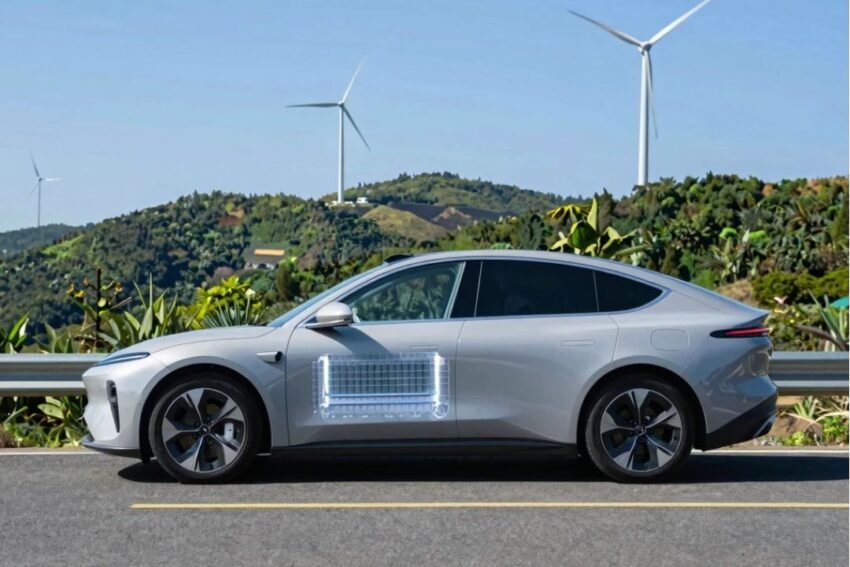
Introduction
Electric vehicles are changing the way people think about transportation. What was once considered an emerging automotive technology is now becoming an important part of the global shift toward cleaner, more connected, and increasingly software-driven mobility.
In 2026, electric vehicle technology continues to evolve across several areas, including batteries, charging infrastructure, electric motors, vehicle software, artificial intelligence, energy management, and battery recycling. At the same time, governments, automakers, technology companies, and energy providers are working to develop the infrastructure required to support wider EV adoption.
The future of electric vehicles will not depend on one technology alone. Instead, it will be shaped by improvements across the entire EV ecosystem—from battery materials and charging networks to smart grids and connected vehicles.
This article explores the biggest EV innovations, battery trends, charging developments, sustainability opportunities, challenges, and future possibilities.
What Is Driving the Future of Electric Vehicles?
Several major factors are accelerating EV development.
These include:
- Battery innovation
- Charging infrastructure
- Lower energy consumption
- Artificial intelligence
- Connected vehicles
- Government policies
- Renewable energy
- Battery recycling
- Consumer demand
- Automotive software
Together, these developments are creating vehicles that are increasingly efficient, intelligent, and integrated with broader energy systems.
1. Next-Generation EV Batteries
Battery technology is one of the most important areas of EV innovation.
The battery affects:
- Driving range
- Charging speed
- Vehicle weight
- Cost
- Performance
- Durability
Automakers and battery manufacturers continue to investigate different battery chemistries and manufacturing techniques that could improve these characteristics.
The long-term goal is to produce batteries that offer greater energy density, faster charging, longer service life, improved safety, and lower production costs.
2. Solid-State Battery Technology
Solid-state batteries are frequently discussed as a potential next-generation EV technology.
Unlike conventional lithium-ion batteries that use liquid or gel electrolytes, solid-state designs use solid electrolyte materials.
Potential advantages include:
- Higher energy density
- Faster charging potential
- Improved safety
- Greater packaging flexibility
However, large-scale production, cost, durability, manufacturing complexity, and real-world performance remain important considerations.
Solid-state batteries could become increasingly important if manufacturers successfully overcome these challenges.
3. Faster EV Charging
Charging speed is one of the most important factors affecting EV convenience.
Future charging systems are expected to focus on reducing the time drivers spend waiting for energy.
Charging improvements may come from:
- Better battery chemistry
- Higher-power charging systems
- Improved thermal management
- Better battery preconditioning
- More efficient charging infrastructure
The charging experience depends on both the vehicle and the charger, so improvements need to happen on both sides.
4. Expansion of Charging Infrastructure
A strong charging network is essential for widespread EV adoption.
Charging infrastructure can include:
- Home chargers
- Workplace chargers
- Shopping-center chargers
- Public charging stations
- Highway fast chargers
- Fleet charging facilities
As EV ownership grows, charging networks will need to become more accessible, reliable, and strategically located.
The availability of charging infrastructure can vary considerably by region, so local conditions remain important for consumers.
5. Wireless EV Charging
Wireless charging is another technology being explored for electric vehicles.
Instead of physically connecting a cable, wireless systems can transfer energy through electromagnetic fields between charging equipment and a compatible vehicle.
Potential applications include:
- Home charging
- Public parking
- Fleet operations
- Automated charging
Wireless charging could become particularly useful for vehicles that operate frequently, such as taxis, delivery fleets, and autonomous transportation services.
6. Vehicle-to-Home Technology
Electric vehicles contain large batteries that can potentially provide electricity beyond transportation.
Vehicle-to-home, or V2H, technology can allow compatible EVs to supply electricity to a home when the necessary vehicle, charger, and electrical infrastructure are available.
Potential benefits include:
- Backup power
- Energy management
- Greater use of stored electricity
- Integration with solar systems
Availability depends on vehicle compatibility, charging equipment, utility rules, and local regulations.
7. Vehicle-to-Grid Technology
Vehicle-to-grid, or V2G, technology could connect EV batteries with electricity networks.
In a V2G system, compatible vehicles may be able to provide electricity to the grid under appropriate conditions.
This could potentially help utilities manage:
- Peak demand
- Renewable-energy variability
- Grid flexibility
- Energy storage
Millions of EVs could eventually function as a distributed energy-storage resource.
8. Electric Vehicles and Renewable Energy
The environmental benefits of EVs depend partly on how their electricity is produced.
When EV charging is powered by low-carbon electricity, the overall emissions associated with driving can be reduced compared with conventional combustion vehicles.
Solar and wind energy can also complement EV charging.
For example:
Solar generation → home energy system → EV charging → stored transportation energy
This creates a stronger connection between transportation and renewable energy.
9. AI-Powered Electric Vehicles
Artificial intelligence is becoming increasingly important in EVs.
AI can assist with:
- Energy management
- Route planning
- Battery optimization
- Driver assistance
- Predictive maintenance
- Charging recommendations
- Vehicle personalization
An intelligent EV can analyze driving conditions and help optimize energy use.
Future systems may become increasingly capable of adapting vehicle settings to individual driving patterns.
10. Smarter EV Route Planning
EV navigation is becoming more sophisticated.
A smart navigation system can consider:
- Battery state
- Route distance
- Traffic
- Terrain
- Weather
- Charging stations
- Estimated energy consumption
Instead of simply showing the shortest route, an EV system can help identify routes that are practical based on available battery energy and charging opportunities.
11. Improved Electric Motors
Battery technology receives much of the attention, but electric motors are also improving.
Future electric motors are expected to focus on:
- Higher efficiency
- Lower weight
- Better thermal performance
- Improved power density
- Reduced material use
More efficient motors can help EVs travel farther without necessarily requiring larger batteries.
12. Lightweight EV Design
Vehicle weight has a major impact on energy consumption.
Manufacturers are exploring lightweight materials and structural designs to improve efficiency.
Potential materials include:
- Advanced steel
- Aluminum
- Composites
- Other lightweight structural materials
Reducing vehicle weight can improve range, handling, and energy efficiency.
13. Software-Defined Electric Vehicles
Modern EVs are increasingly software-driven.
Software can control:
- Battery management
- Energy consumption
- Charging
- Driver assistance
- Infotainment
- Vehicle settings
- Connectivity
Over-the-air updates can allow manufacturers to improve certain software features without requiring traditional service visits.
This means the vehicle can potentially gain new capabilities or improvements during its ownership period, depending on manufacturer support.
14. Advanced Driver Assistance
EVs are increasingly being paired with advanced driver-assistance systems.
These may include:
- Adaptive cruise control
- Automatic emergency braking
- Lane-keeping assistance
- Blind-spot monitoring
- Parking assistance
- Driver monitoring
The technology can improve convenience and safety, but drivers remain responsible for understanding and supervising the systems.
15. Autonomous Electric Vehicles
Electric vehicles may become an important platform for autonomous transportation because their software and electronic architectures can support advanced sensing and control systems.
Potential applications include:
- Robotaxis
- Autonomous delivery vehicles
- Automated shuttles
- Industrial transportation
However, fully autonomous driving remains technically and regulatorily challenging, and capabilities vary significantly between systems and locations.
16. Battery Recycling
Battery recycling will become increasingly important as the global EV fleet grows.
EV batteries contain valuable materials that can potentially be recovered.
Recycling can help:
- Recover useful materials
- Reduce waste
- Support battery supply chains
- Reduce pressure on some raw-material resources
The recycling industry is developing processes to make battery-material recovery more efficient.
17. Second-Life EV Batteries
Used EV batteries may still have useful energy-storage capacity after they are no longer ideal for vehicle applications.
Some batteries could potentially be repurposed for:
- Home energy storage
- Solar storage
- Commercial energy systems
- Backup power
- Grid-support applications
This concept is often called second-life battery use.
18. Sustainable Battery Manufacturing
The environmental impact of EVs isn’t limited to driving.
Battery production requires raw materials, energy, manufacturing infrastructure, and transportation.
The industry is therefore exploring ways to improve:
- Material efficiency
- Manufacturing energy use
- Recycling
- Supply-chain transparency
- Responsible sourcing
More sustainable manufacturing can improve the overall environmental profile of electric transportation.
19. EVs and Smart Cities
Electric vehicles can become part of broader smart-city systems.
Connected EVs could potentially communicate with:
- Traffic signals
- Charging stations
- Energy grids
- Parking systems
- Navigation services
- Public transportation networks
This could create more efficient transportation and energy systems.
For example, charging infrastructure could be coordinated with electricity demand and renewable-energy availability.
20. Electric Commercial Vehicles
The future of EVs isn’t limited to passenger cars.
Electric technology is also being developed for:
- Delivery vans
- Buses
- Trucks
- Taxis
- Commercial fleets
- Specialized vehicles
Fleet operators may benefit from predictable routes and centralized charging.
Commercial electrification could have a significant effect on transportation energy consumption.
Benefits of Future EV Technology
Lower Operating Costs
Electric drivetrains can have fewer traditional engine components and may reduce certain maintenance requirements.
Greater Efficiency
Electric motors can convert electrical energy into motion efficiently.
Reduced Tailpipe Emissions
Battery-electric vehicles produce no tailpipe emissions while operating.
Better Smart Features
Connected software can improve navigation, charging, and vehicle management.
Energy Integration
EVs can potentially become part of home and grid energy systems.
New Transportation Models
Electric vehicles can support emerging services such as autonomous shuttles and electrified commercial fleets.
Challenges Facing the EV Industry
Charging Infrastructure
More charging stations are needed in many markets.
Battery Costs
Battery manufacturing remains an important factor in vehicle cost.
Raw Materials
Battery production depends on various materials and complex global supply chains.
Grid Capacity
Large-scale EV adoption can increase electricity demand and may require grid upgrades.
Cold and Hot Weather
Temperature can affect battery performance and charging behavior.
Recycling
Large-scale battery recycling systems need to continue developing alongside EV adoption.
How Consumers Can Prepare for the EV Future
If you’re considering an EV, evaluate your personal driving requirements.
1. Calculate Daily Driving
Determine how far you normally drive.
2. Check Charging Access
Home charging can make EV ownership significantly more convenient.
3. Research Local Infrastructure
Look at public charging availability in your area and along common travel routes.
4. Compare Total Ownership Costs
Consider:
- Purchase price
- Electricity
- Insurance
- Maintenance
- Charging equipment
- Financing
- Depreciation
5. Consider Battery Warranty
Review the manufacturer’s battery warranty carefully.
6. Compare Real-World Range
Don’t rely only on advertised figures.
7. Consider Future Needs
Think about whether your driving requirements may change over the next several years.
Future EV Trends to Watch
Several developments could shape the next stage of electric transportation.
Solid-State Batteries
Potential improvements in energy density and charging.
Ultra-Fast Charging
Shorter charging sessions for compatible vehicles and chargers.
AI-Powered Energy Management
Smarter use of available battery energy.
Vehicle-to-Grid Integration
Greater interaction between EVs and electricity networks.
Battery Recycling
Improved recovery of valuable materials.
Autonomous Electric Transportation
Potential growth of automated shuttles and other services.
Software-Defined Vehicles
More vehicle functions controlled and improved through software.
Smart Charging
Charging coordinated with energy prices, grid demand, and renewable generation.
Frequently Asked Questions
What is the future of electric vehicles?
The future of EVs is likely to include better batteries, faster charging, improved software, AI-powered systems, smarter energy management, expanded charging networks, and greater integration with renewable energy.
Will EV batteries improve?
Battery technology continues to develop, with research focused on energy density, charging speed, durability, safety, cost, and material efficiency.
Will electric cars become cheaper?
Manufacturing improvements, competition, battery developments, and economies of scale may influence EV pricing, but actual prices will vary by market and model.
Can an EV power a home?
Some compatible EVs and charging systems can support vehicle-to-home functionality. Availability depends on the vehicle, equipment, electrical system, utility, and local regulations.
Are EVs better for the environment?
Battery-electric vehicles produce no tailpipe emissions while driving. Their overall environmental impact also depends on manufacturing, electricity generation, battery materials, recycling, and vehicle lifespan.
Conclusion
The future of electric vehicles is about much more than replacing gasoline engines with electric motors. The next generation of transportation is being shaped by advances in batteries, charging infrastructure, artificial intelligence, vehicle software, renewable energy, smart grids, and connected transportation systems.
Battery improvements could increase range and charging convenience. Smart charging and vehicle-to-grid technology could connect EVs with the energy system. AI and software could make vehicles more efficient and easier to manage, while battery recycling could help create a more sustainable supply chain.
There are still challenges, including charging availability, battery costs, raw-material supply, grid capacity, and recycling infrastructure. However, continued innovation across the automotive and energy industries is creating new opportunities.
As these technologies mature, electric vehicles are likely to become an increasingly important part of sustainable transportation and smart mobility, helping connect cars, homes, businesses, renewable energy, and digital infrastructure in new ways.